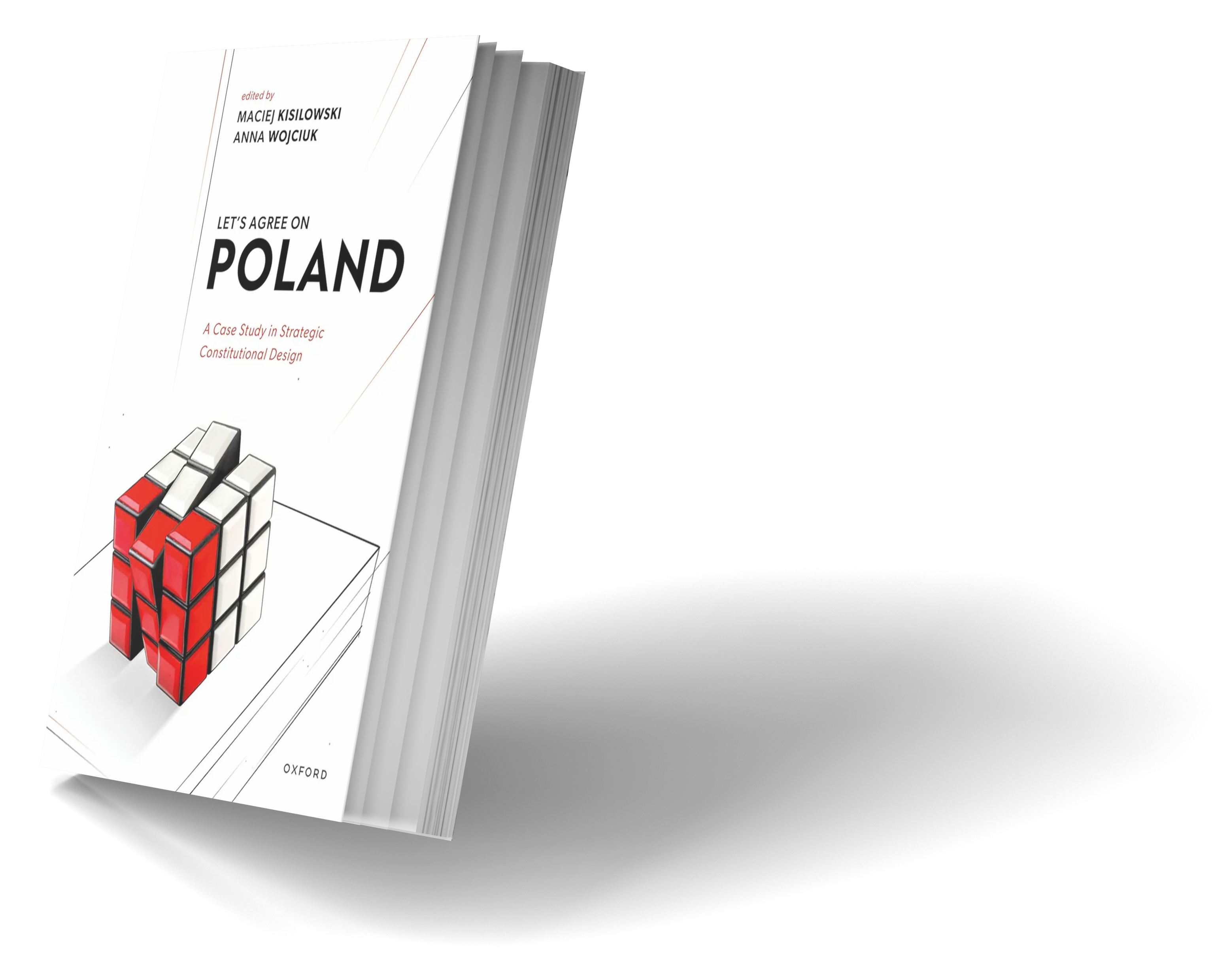
At a time when democracy worldwide is under strain, Let’s Agree on Poland offers a bold vision of how divided societies can escape deadlock. Born of a cross-partisan initiative uniting progressives and conservatives, the book blends rigorous analysis with innovative storytelling. It presents a concrete blueprint for reform, tested through financial models and public-management insights, and dramatized in five stories about fictional “dream” voivodeships. Adapted from Poland’s 2023 bestseller, this international edition adds new essays diagnosing today’s global democratic crisis and charting the mindset needed to overcome it.

Buy on Amazon


STORY

The Social Contract Incubator—known as IUS, the abbreviation of our Polish name Inkubator Umowy Społecznej—was created
to answer a pressing question: can democracy endure when a nation is bitterly divided?

EXPLORE THE STORY BEHIND THE SOCIAL CONTRACT INCUBATOR:


Poland in the mid-2010s was consumed by what many called the “Polish–Polish war.” Some feared that the ruling Law and Justice party (PiS) was steering the country toward authoritarianism; others dismissed such concerns as partisan exaggeration. Yet across the divide one truth resonated: the conflict itself was weakening the country at a dangerous historical moment. That realization brought together more than 130 intellectuals from the left, center, and right. Each kept their ideological identity, but all agreed to seek something larger than daily disputes: institutions strong enough to contain disagreement. Prof. Arkadiusz Radwan, one of our conservative colleagues, gave us the phrase that became our motto: “Agreed, we are different” [Pol. Zgoda. Jesteśmy różni.].

Explore more


is a new international discussion series inspired by the book. Bringing together the authors, members of the Social Contract Incubator, and diverse voices from politics, academia, and civil society, it explores contractarian approaches to redesigning the democratic rules that shape our common future.

HERE ARE THE UPCOMING AND PAST EVENTS


PEOPLE

Let’s Agree on Poland is the result of the voluntary efforts of a diverse group of contributors. Authors, editors, and members of the Social Contract Incubator came together across disciplines and perspectives to design a shared vision for Poland’s democratic future.


Explore more

PERSPECTIVES

The ideas behind Let’s Agree on Poland are sparking debate well beyond our events. Here you can find op-eds, interviews with the co-authors, and reviews that continue the conversation in leading media outlets.

Explore more

CHARTER

Every movement needs a starting point. For IUS, it was the draft Voivodeship Charter—the first concrete legislative
proposal created by an ideologically diverse team under the direction of Prof. Maciej Kisilowski in 2019.


The idea that constitutional reform should begin with a regional charter, not a sprawling amendment to the national constitution or a heavy white paper, came from Prof. Antoni Dudek. It drew on the same instinct that later inspired us to devote half of Let’s Agree on Poland to fictional stories: People understand institutions best when they can see how they would actually work. By experimenting at the voivodeship level, we and our readers could gain a far more tangible feel for decentralized democracy than abstract theory alone could ever provide.

As we shaped the Charter, we made a radical choice. Instead of formatting it like a typical legal code, with articles and subsections, we wrote it as a series of questions and answers—the very ones citizens might ask about their regional government. In our proposal, this is not just an FAQ about the law—the FAQ is the law. Nothing better reflects our mission of bringing democracy closer to the people than expressing fundamental rules in clear, accessible language. Below you can explore the full Model Charter, and we invite you to leave your comments alongside each answer.

Explore more


DREAMS

When arguments reach their limits, imagination can step in. To break through Poland’s polarized climate, IUS turned to storytelling—asking what everyday life might look like under our proposed constitutional settlement.


We call these stories “dreams” not only because they describe a reality not yet achieved. Like ordinary dreams, they provoke, inspire, and expand our imagination. Written in early 2023, they imagined a moment when, in the face of resurgent Russian imperialism, Poland’s political camps realized that their war was weakening the nation. In this imagined future, both sides still clung fiercely to their values but agreed to channel their disputes into a new social contract.


A Better Present

For this international edition, we have not updated the stories. They now read less as visions of a distant future than as an alternative present: a Poland in 2025 that has already chosen institutions strong enough to hold its differences. The starting point is the December 2023 constitutional amendment. It gave each voivodeship its own Charter, approved by referendum. Voivodes gained local democratic legitimacy, the Senate became a chamber of regions, and fiscal autonomy was expanded. Ordinary laws reinforced citizen participation, regional cooperation, and local media oversight.

The process of drafting the first Charters in 2024 sparked genuine debate in assemblies, town halls, and even schools. For many citizens it was the first time constitutional law was something they could argue about and shape, rather than a text handed down from Warsaw. On May 28, 2024—thirty-four years after Poland’s first free local elections—voters elected new regional governments and decided how far to adapt the model Charter. Most adopted it with modest adjustments, proving that decentralization could deliver both stability and diversity.


Center-Left Dreams

Three of the dreams explore how progressive, leftist, and liberal traditions might flourish within this framework.

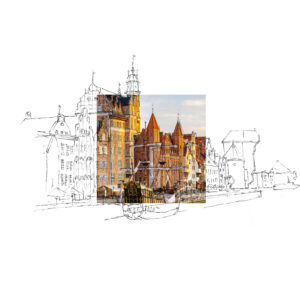
In Progressive Pomerania, a patchwork family arriving from abroad discovers a region proud of its Hanseatic openness. Integration policies are written into the Charter, smart-home technologies support the elderly, and young volunteers turn innovation into solidarity. Though same-sex marriage faces resistance from the Constitutional Tribunal, partnership status and anti-discrimination programs—summed up in the slogan “Family by Any Name”—anchor equality in daily life.

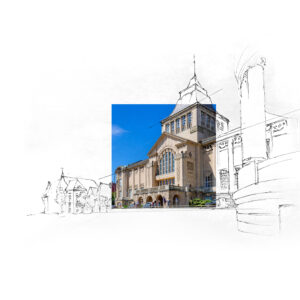
Leftist West Pomerania takes the opposite gamble from Poland’s recent past. Instead of cash transfers, the region doubles down on public services: strong schools, public health, and affordable transport. Fiscal rules force tough choices, but local referenda legitimize them. Progressive taxes, a fair property tax, and stronger unions turn redistribution into lived reality.


Liberal Greater Poland makes a different pitch: simplicity and efficiency. A flat 15% income and business tax is paired with privatization of redundant assets, feeding a regional wealth fund. Bureaucracy shrinks through digitization, public services are delivered through voucher-backed companies, and the green transition is guided by eco-taxes on emissions.

Right-Wing Dreams

The other two stories show how conservative and Christian Democratic visions thrive under the same settlement.

In Conservative Podlasie, a family gathering near Suwałki shows a region that prizes tradition while embracing innovation. Agricultural Valley 4.0 modernizes food production, the Charter enshrines respect for religious institutions, and policies encourage marriage, Sunday rest, and vocational education. Relations with liberal Białystok are managed through the new voivodeship senate, while cooperation even emerges with leftist West Pomerania.

Christian Democratic Subcarpathia builds its identity around subsidiarity, inspired by Catholic social teaching but firmly pro-European. Counties are replaced with service hubs tailored to communities, and the voivode is chosen by the regional assembly to encourage coalition government. The Aviation Valley industry links with Ukraine’s reconstruction, while transport, healthcare, and education finally receive systematic attention.

Why These Dreams Matter

Together, these five dreams are not blueprints but provocations. They show how shared constitutional rules can host radically different ways of life, each legitimate, each vibrant, each accountable to its own citizens. In times of division, they remind us that democracy’s strength does not come from uniformity. It comes from institutions capable of holding our differences.


CITE

To support accurate referencing, we provide suggested citation formats for the book and each chapter, along with downloadable files compatible with major citation managers (EndNote, Zotero, Mendeley, RefWorks, BibTeX).


CITE THE BOOK

Kisilowski, M., & Wojciuk, A. (Eds.). (2025). Let’s Agree on Poland. Oxford University Press.


CITE THE CHAPTER


Chapter 1.Kisilowski, M., & Wojciuk, A. (2025). Introduction: A polarized country in need of a new social contract. In M. Kisilowski & A. Wojciuk (Eds.), Let’s Agree on Poland (pp. 1–36). Oxford University Press.

Chapter 2.Dudek, A., Kisilowski, M., & Wojciuk, A. (2025). The Republic of our dreams. In M. Kisilowski & A. Wojciuk (Eds.), Let’s Agree on Poland (pp. 37–62). Oxford University Press.

Chapter 3.Chłoń-Dominczak, A., Wojciuk, A., & Giedrojć, J. (2025). Harmony by choice. In M. Kisilowski & A. Wojciuk (Eds.), Let’s Agree on Poland (pp. 63–82). Oxford University Press.

Chapter 4. Bukowski, M., Herbst, M., & Kaczor, T. (2025). Poland of equal opportunities. In M. Kisilowski & A. Wojciuk (Eds.), Let’s Agree on Poland (pp. 83–98). Oxford University Press.

Chapter 5. Przybylski, W., & Kisilowski, M. (2025). Center strong with strategy. In M. Kisilowski & A. Wojciuk (Eds.), Let’s Agree on Poland (pp. 99–120). Oxford University Press.

Chapter 6. Balicki, R., Gwizdak, J., & Zoll, F. (2025). Return to democracy. In M. Kisilowski & A. Wojciuk (Eds.), Let’s Agree on Poland (pp. 121–135). Oxford University Press.

Chapter 7. Granat, M., Grosse, T. G., Radwan, A., & Sokołowski, J. (2025). Strengthening democracy. In M. Kisilowski & A. Wojciuk (Eds.), Let’s Agree on Poland (pp. 136–150). Oxford University Press.

Chapter 8. Scheppele, K. L. (2025). Comment: Reimagining the Polish constitution by looking to the past. In M. Kisilowski & A. Wojciuk (Eds.), Let’s Agree on Poland (pp. 151–156). Oxford University Press.

Chapter 9. Linder, W. (2025). Comment: Winding road to democracy. In M. Kisilowski & A. Wojciuk (Eds.), Let’s Agree on Poland (pp. 157–161). Oxford University Press.

Chapter 10. Kisilowski, M., & Wojciuk, A. (2025). Why imagine the new contract? In M. Kisilowski & A. Wojciuk (Eds.), Let’s Agree on Poland (pp. 163–181). Oxford University Press.

Chapter 11. Chmielewska-Szlajfer, H., & Dobrowolski, P. (2025). The dream Progressive Voivodship. In M. Kisilowski & A. Wojciuk (Eds.), Let’s Agree on Poland (pp. 182–199). Oxford University Press.

Chapter 12. Drożdż, J., & Sysko-Romańczuk, S. (2025). The dream Conservative Voivodship. In M. Kisilowski & A. Wojciuk (Eds.), Let’s Agree on Poland (pp. 200–216). Oxford University Press.

Chapter 13. Pacewicz, A., Smoleński, J., & Żabicki, M. (2025). The dream Leftist Voivodship. In M. Kisilowski & A. Wojciuk (Eds.), Let’s Agree on Poland (pp. 217–234). Oxford University Press.

Chapter 14. Rozdeiczer, Ł., & Wołek, A. (2025). The dream Christian Democratic Voivodship. In M. Kisilowski & A. Wojciuk (Eds.), Let’s Agree on Poland (pp. 235–250). Oxford University Press.

Chapter 15. Stypułkowski, L., Tatała, M., & Zieliński, M. (2025). The dream Classical Liberal Voivodship. In M. Kisilowski & A. Wojciuk (Eds.), Let’s Agree on Poland (pp. 251–275). Oxford University Press.

Chapter 16. Nicolaidis, K. (2025). Comment: A European dream about Polish dreams. In M. Kisilowski & A. Wojciuk (Eds.), Let’s Agree on Poland (pp. 276–279). Oxford University Press.

Chapter 17. Lindseth, P. L. (2025). Comment: For a strong Poland, united in Its diversity. In M. Kisilowski & A. Wojciuk (Eds.), Let’s Agree on Poland (pp. 280–282). Oxford University Press.

Chapter 18. Dudek, A., Kisilowski, M., & Wojciuk, A. (2025). Let’s Do It Differently. In M. Kisilowski & A. Wojciuk (Eds.), Let’s Agree on Poland (pp. 283–304). Oxford University Press.


LET’S AGREE ON POLAND presents the pro-bono work of the SOCIAL CONTRACT INCUBATOR. The #LETSAGREE series and related discussions are generously supported by donors, including


CONTACT

For press inquiries, interview requests, event proposals, or general questions, please reach out to us at:
kontakt@nowaumowa.pl